The concept is compelling but critical requirements are undocumented.
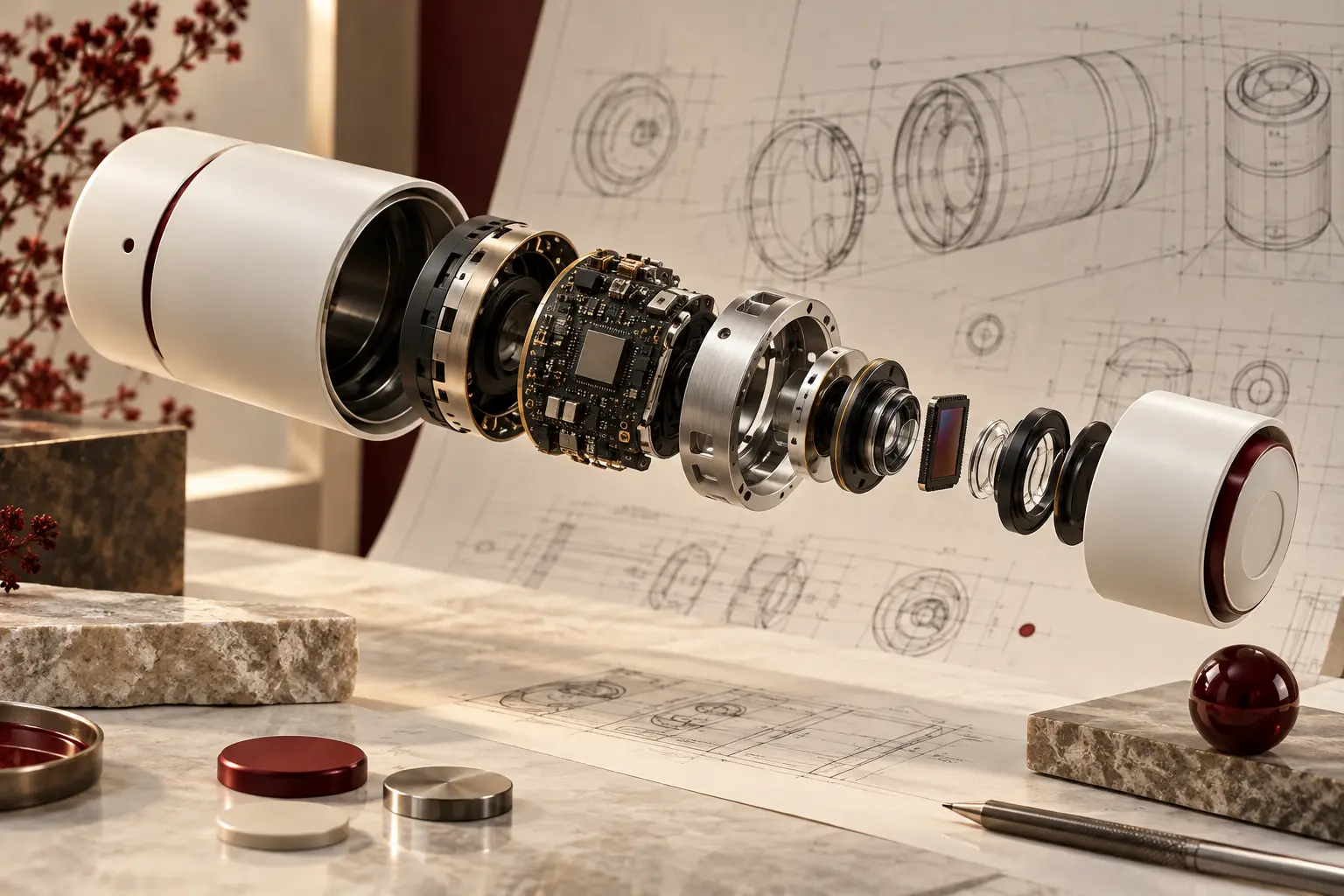
03SUPPLY CHAIN & PRODUCT / PRODUCT DESIGN
A product needs to work beyond the prototype.
Coordinate design, engineering and development decisions with manufacturability, usability, cost and eventual verification in mind.
BEYOND THE SERVICE LIST
The purpose of a prototype is to reduce uncertainty, not to declare the design finished.
THE DECISION BEHIND THE WORK
Design intent has to survive engineering and production.
Product development connects a promise to physical constraints. The user experience may suggest a particular form or function, while engineering raises questions about materials, durability, tolerances, safety, testing and repeatable production. Decisions made in isolation create costly revisions later.
We favor a clear product brief, explicit assumptions and review points that match the maturity of the idea. Early concepts require exploration; later stages require stronger evidence and change control. Prototypes can answer useful questions, but a visually convincing prototype does not prove manufacturability, compliance or field performance.
THE OPERATING REALITY
A beautiful concept is not yet a production-ready product.
Early decisions shape tooling, tolerances, suppliers, testing and lifecycle costs. Product work benefits from making those dependencies visible before expensive commitments.
Design changes arrive after supplier or tooling commitments.
Teams disagree about readiness to test, produce or scale.
WHERE WE FOCUS
Design with the entire lifecycle in view.
From requirements through iterations, align the product idea with practical engineering and production constraints.
Product brief and constraints
Define intended users, form and function, target unit cost, materials, operating conditions and applicable regulatory requirements.
Concept and technical development
Coordinate industrial design, mechanical or electronic engineering as relevant, design-for-manufacture review and component feasibility.
Prototype and evaluation
Plan model or prototype builds, usability and fit checks, engineering revisions and evidence required to advance.
Production readiness
Review drawings, bills of materials, tooling decisions, supplier capability, test plans and change control before volume commitments.
A product validation sequence
Turn an idea into a testable requirement.
Early choices should make manufacturability, user needs and costly tradeoffs visible before a production commitment.
DECISIONEVIDENCE TO MAKE VISIBLE
Define
Whose problem does the product solve?
Use conditions, functional needs and constraintsPrototype
Which assumption must be tested first?
Model, fit, usability and iteration recordRelease
What evidence permits production?
Drawings, tests, approvals and change ownershipWhat the first working output might be
Possible first output: a requirements-to-test trace and a staged prototype decision plan.
Important limitation: A successful prototype does not by itself prove production quality, safety or market demand.AN EVIDENCE-LED REVIEW
Carry requirements into each development decision.
These are useful lines of inquiry, not a universal checklist. The specific evidence and scope depend on the business context.
Intended use
What must the product achieve for its actual user?
Define functions, environment, constraints and acceptance criteria.
Feasibility
Can the concept be manufactured and verified?
Review materials, tolerances, assembly and supplier capability.
Readiness
Which uncertainties remain before committing capital?
Evaluate prototypes, test plans, change controls and production documentation.
ILLUSTRATIVE OPERATING SITUATION
A compelling prototype with an expensive hidden tolerance.
This is a hypothetical example for explanation. It is not presented as a client engagement or result.A business presents a successful prototype for a compact consumer device. Industrial design is strong, but one component relies on a tolerance that the proposed production process cannot maintain consistently. The issue is not visible in the marketing photography.
The next useful step is an engineering and supplier feasibility review, controlled revisions, representative prototypes and clearly documented acceptance tests. The design should proceed toward production only after the key risks have an evidence-based resolution.
BOUNDARIES AND RESPONSIBILITY
A prototype is not production approval.
Products with safety, electrical, medical, food-contact or other regulated uses may require specialized testing and approvals. Scope and claims of compliance must be validated for each product and market.
Independent reference: ISO guidance on continual improvement and process approach ↗. This source informs the topic; it does not endorse Avermont Partners.
QUESTIONS WORTH CLARIFYING
Which assumption is most expensive to get wrong?
An informed first conversation is often more useful than a prematurely detailed proposal.
Can industrial design begin before a supplier is chosen?
Yes, but manufacturability assumptions should be tested early. Supplier capabilities and production economics may influence geometry, materials and assembly.
How many prototype rounds are normal?
There is no universal number. The required iterations depend on product novelty, risk, requirements and what each test reveals.
When is a design ready for scale?
When the requirements, production method, quality criteria, documentation, cost assumptions and relevant approvals are sufficiently established for the intended commitment.
THE QUESTION WORTH ASKING
What would need to be true for this design to be made consistently?
Useful progress begins with a clear requirement, the right evidence and ownership of the next decision.
View all Supply Chain capabilitiesTHE NEXT CONVERSATION
Develop the product and the path to production.
Share the situation, constraints and intended outcome. We can then assess whether a focused engagement would be useful.
Discuss an Engagement